Stress Management
Stress is a common experience for teenagers, but it’s important to learn how to effectively manage it to maintain a healthy lifestyle. By incorporating various strategies and activities into your routine, you can reduce stress levels and improve your overall well-being.
Importance of Hobbies and Relaxation Techniques
Engaging in hobbies and relaxation techniques can be beneficial for managing stress. These activities offer a break from the demands of daily life and provide an opportunity to unwind and recharge. Whether it’s painting, playing a musical instrument, practicing yoga, or spending time in nature, finding activities that bring you joy and relaxation can help alleviate stress.
- Practicing mindfulness: Mindfulness techniques, such as deep breathing exercises and meditation, can help calm the mind and reduce stress levels.
- Physical exercise: Regular physical activity, whether it’s going for a run, dancing, or playing a sport, can release endorphins that boost mood and reduce stress.
- Journaling: Writing down your thoughts and feelings in a journal can provide a healthy outlet for processing emotions and reducing stress.
- Socializing: Spending time with friends and loved ones can offer support and companionship, helping to alleviate feelings of stress and isolation.
Healthy Lifestyle
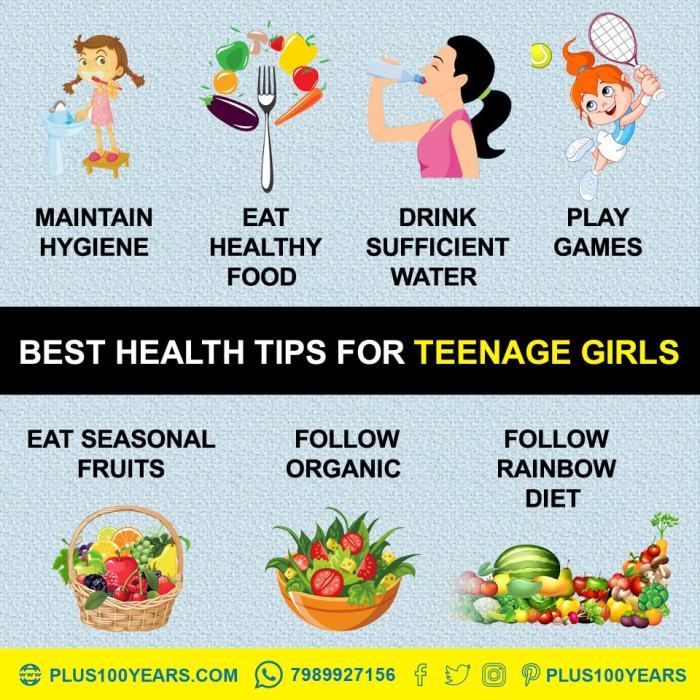
Healthy lifestyle tips for teenagers – Adopting a healthy lifestyle as a teenager is crucial for overall well-being and long-term health. It involves a combination of good nutrition, regular physical activity, adequate sleep, and positive social interactions.
Components of a Healthy Lifestyle for Teenagers
- Eating a balanced diet rich in fruits, vegetables, whole grains, and lean proteins.
- Engaging in at least 60 minutes of physical activity each day, such as sports, dancing, or jogging.
- Getting 8-10 hours of sleep each night to support growth and development.
- Maintaining strong relationships with friends and family for emotional support.
Healthy vs. Unhealthy Habits in Teenagers
Healthy habits like eating nutritious foods, exercising regularly, and managing stress can lead to improved energy levels, mood, and overall health. On the other hand, unhealthy habits like consuming sugary drinks, fast food, and staying up late can negatively impact physical and mental well-being.
Tips for Incorporating Healthy Choices into Daily Routine
- Plan and prepare healthy meals and snacks in advance to avoid unhealthy food choices.
- Find physical activities that you enjoy and make them a regular part of your routine.
- Practice mindfulness techniques like deep breathing or meditation to reduce stress and anxiety.
- Limit screen time and prioritize face-to-face interactions with friends and family.
Medical Innovations
Medical innovations play a crucial role in promoting the health and well-being of teenagers. With advancements in technology, healthcare for teenagers has seen significant improvements in recent years.
Telemedicine
Telemedicine has revolutionized healthcare access for teenagers by allowing them to consult with healthcare providers remotely through video calls or messaging. This technology enables teenagers to seek medical advice and treatment without the need for in-person visits, making healthcare more convenient and accessible.
Wearable Health Tech
Wearable health technology such as fitness trackers and smartwatches have become increasingly popular among teenagers. These devices can track physical activity, monitor vital signs, and provide valuable insights into overall health and wellness. By integrating technology into their daily lives, teenagers can better manage their health and make informed decisions about their well-being.
Genetic Testing, Healthy lifestyle tips for teenagers
Advancements in genetic testing have allowed teenagers to gain insights into their genetic predispositions for certain health conditions. By understanding their genetic makeup, teenagers can take proactive steps to prevent potential health issues and personalize their healthcare approach. Genetic testing empowers teenagers to make informed decisions about their lifestyle choices and healthcare options.
Virtual Reality Therapy
Virtual reality therapy is a cutting-edge innovation that has shown promising results in managing stress, anxiety, and mental health issues among teenagers. By immersing users in virtual environments, this therapy technique helps teenagers cope with various psychological challenges and develop effective stress management strategies. Virtual reality therapy offers a unique and engaging approach to mental health treatment for teenagers.
Nutritional Supplements
Nutritional supplements play a crucial role in a teenager’s diet by providing essential vitamins, minerals, and other nutrients that may be lacking in their daily meals.
Importance of Consulting a Healthcare Professional
Before incorporating any nutritional supplements into their routine, teenagers should consult a healthcare professional to ensure they are taking the right supplements in the appropriate dosages.
Common Types of Nutritional Supplements
- Vitamin D: Important for bone health and immune function, especially for teenagers who may not get enough sunlight exposure.
- Omega-3 fatty acids: Essential for brain health and development, commonly found in fish oil supplements.
- Iron: Vital for teens, especially females, to prevent anemia and support overall growth and development.
- Calcium: Essential for strong bones and teeth, crucial during the teenage years for optimal bone growth.
- Probiotics: Beneficial for gut health and digestion, helping to maintain a healthy balance of gut bacteria.
Fitness Routine
Maintaining a regular fitness routine is crucial for teenagers to stay healthy and active. It not only helps in physical development but also promotes mental well-being. Here are some age-appropriate exercises for teenagers and tips to stay motivated.
Age-Appropriate Exercises
- Cardiovascular exercises like running, cycling, or swimming help in improving endurance and heart health.
- Strength training with bodyweight exercises or light weights can help build muscle and bone strength.
- Flexibility exercises like yoga or stretching can improve range of motion and prevent injuries.
Benefits of Regular Exercise
- Improves physical health by reducing the risk of chronic diseases like obesity, diabetes, and heart conditions.
- Boosts mood and mental health by releasing endorphins and reducing stress and anxiety.
- Increases energy levels and improves overall quality of life.
Tips to Stay Motivated
- Set specific, achievable goals to track progress and stay motivated.
- Find a workout buddy or join group classes to make exercise more enjoyable and social.
- Switch up your routine regularly to prevent boredom and keep challenging yourself.
- Reward yourself for reaching milestones to stay motivated and celebrate your progress.
Health Screenings
Regular health screenings are essential for teenagers to monitor their overall health and detect any potential issues early on. These screenings can help identify any underlying health conditions, allowing for timely intervention and treatment to maintain optimal health.
Common Health Screenings for Teenagers
- Blood Pressure: Regular blood pressure checks can help identify hypertension or other cardiovascular issues.
- Cholesterol Levels: Screening for cholesterol levels can assess the risk of heart disease and other complications.
- Body Mass Index (BMI): BMI screenings can help determine if a teenager is at a healthy weight for their age and height.
- Vision and Hearing Tests: Regular vision and hearing screenings are crucial for detecting any impairments early on.
- Skin Cancer Screening: Skin checks can help identify any unusual moles or skin changes that may indicate skin cancer.
Accessing Health Screening Services
To access health screening services, teenagers can visit their primary care physician, school health clinic, or local community health center. Many healthcare providers offer routine screenings as part of preventive care services. Additionally, some schools may organize health fairs or screening events where teenagers can get checked for various health indicators.
Disease Prevention
Preventing diseases is crucial for teenagers to maintain their health and well-being. By taking proactive measures, teenagers can reduce the risk of various illnesses and lead a healthier life overall.
Preventive Measures
- Adopting a balanced diet rich in fruits, vegetables, whole grains, and lean proteins can strengthen the immune system and lower the risk of chronic diseases.
- Engaging in regular physical activity, such as sports, yoga, or simply walking, can improve cardiovascular health and boost overall immunity.
- Avoiding harmful habits like smoking, excessive alcohol consumption, and drug use can significantly reduce the chances of developing respiratory and liver-related diseases.
- Maintaining good hygiene practices, such as washing hands regularly, can prevent the spread of infectious diseases like the flu and common cold.
Common Diseases to Prevent
- Obesity: By following a healthy lifestyle and staying active, teenagers can prevent obesity and reduce the risk of associated conditions like diabetes and heart disease.
- Skin Cancer: Protecting the skin from harmful UV rays by using sunscreen and avoiding excessive sun exposure can help prevent skin cancer.
- Sexually Transmitted Infections (STIs): Practicing safe sex and getting regular screenings can prevent the spread of STIs among teenagers.
Importance of Vaccinations
Vaccinations play a crucial role in disease prevention by providing immunity against various infectious diseases. Teenagers should ensure they are up to date with recommended vaccines, such as those for measles, influenza, and HPV, to protect themselves and others from serious illnesses.
Sleep Hygiene
Establishing good sleep hygiene is crucial for teenagers to ensure they get enough rest for their overall health and well-being. Adequate sleep plays a vital role in various aspects of health, including physical, mental, and emotional well-being.
Tips for Improving Sleep Hygiene:
- Avoid screen time before bed, as the blue light emitted can disrupt the production of melatonin, a hormone that regulates sleep.
- Create a relaxing bedtime routine to signal to your body that it’s time to wind down, such as reading a book or taking a warm bath.
- Ensure your sleep environment is comfortable, cool, dark, and quiet to promote restful sleep.
- Try to maintain a consistent sleep schedule, going to bed and waking up at the same time each day, even on weekends.
Mental Clarity
Maintaining mental clarity is crucial for teenagers to navigate through the challenges of academic, social, and personal life. A healthy lifestyle plays a significant role in enhancing mental clarity by reducing stress and improving focus and concentration.
Techniques for Improving Focus and Concentration
- Establish a routine: Setting a consistent schedule for studying, physical activity, and relaxation can help improve focus.
- Avoid multitasking: Encourage teenagers to focus on one task at a time to enhance concentration.
- Stay organized: Keeping a tidy workspace and using tools like planners can help reduce distractions and improve focus.
- Practice mindfulness: Techniques like deep breathing, meditation, and yoga can enhance focus and concentration.
Mindfulness Practices for Enhancing Mental Clarity
- Body Scan Meditation: This practice involves focusing on different parts of the body to increase awareness and reduce stress.
- Breath Awareness: Encouraging teenagers to pay attention to their breath can help calm the mind and improve focus.
- Gratitude Journaling: Writing down things they are grateful for can shift focus to positive aspects of life and enhance mental clarity.
- Walking Meditation: Engaging in mindful walking can help teenagers clear their minds and improve concentration.
Hydration Importance
Maintaining proper hydration is crucial for teenagers to support their overall health and well-being. Hydration plays a vital role in various bodily functions and is essential for optimal performance, both physically and mentally.
Signs of Dehydration and Effects
- Signs of Dehydration: Thirst, dry mouth, dark urine, fatigue, dizziness, and headache.
- Effects on the Body: Dehydration can lead to decreased cognitive function, impaired physical performance, headaches, and even more severe complications if left untreated.
Tips for Staying Hydrated
- Carry a reusable water bottle with you throughout the day to remind yourself to drink water regularly.
- Set reminders on your phone or use hydration tracking apps to ensure you are drinking an adequate amount of water.
- Include hydrating foods in your diet, such as fruits and vegetables with high water content.
- Avoid sugary drinks and excessive caffeine, as they can contribute to dehydration.
- Drink water before, during, and after physical activity to replenish lost fluids.
FAQ Explained: Healthy Lifestyle Tips For Teenagers
How can teenagers effectively manage stress?
Teenagers can manage stress by engaging in activities like exercise, meditation, and maintaining a healthy work-life balance.
What are some age-appropriate exercises for teenagers?
Examples of age-appropriate exercises include brisk walking, cycling, swimming, and yoga.
Why is hydration important for teenagers?
Hydration is crucial for teenagers as it helps maintain bodily functions, regulate body temperature, and improve overall health.


More Stories